Bed bug infestations disrupt sleep and introduce high emotional stress into a household, yet resolving the problem requires deliberate diagnostic clarity rather than panic. Over-the-counter pyrethroid foggers and…
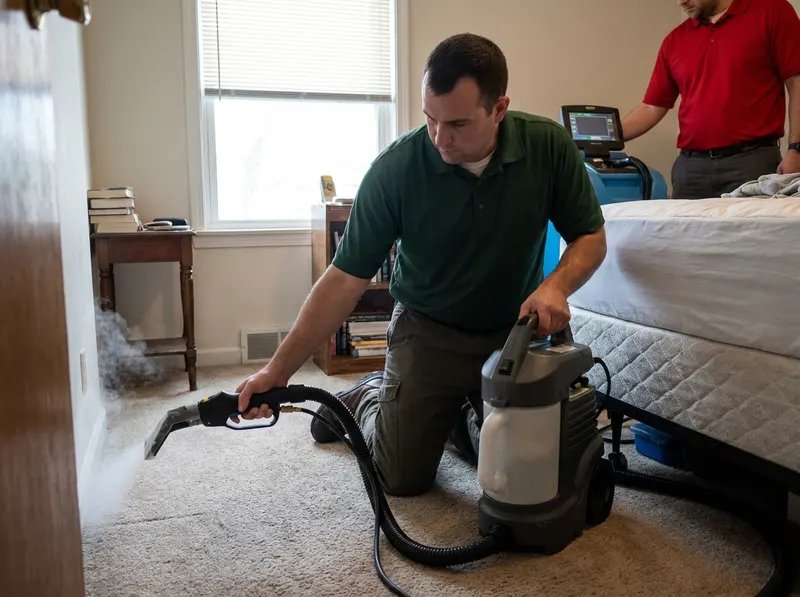
Bed bug infestations disrupt sleep and introduce high emotional stress into a household, yet resolving the problem requires deliberate diagnostic clarity rather than panic. Over-the-counter pyrethroid foggers and aerosol sprays from hardware stores consistently fail because modern bed bugs carry metabolic resistance to common retail formulas; these store-bought products disperse colonies deeper into wall voids, floor joints, and neighboring rooms. Professional remediation relies on Integrated Pest Management protocols that neutralize bed bugs directly in their harborage sites. Licensed technicians inspect mattress tufts, headboards, electrical faceplates, carpet tack strips, and crown molding to identify the perimeter of the infestation before applying targeted residual materials, desiccant dusts, or high-temperature steam.
Older homes across historic Grand Rapids neighborhoods, such as timber-framed multi-family units in Heritage Hill, classic Victorians in Eastown, and brick foundations in Belknap Lookout, present structural conduits where bed bugs migrate through shared plumbing chases and balloon-frame walls. In newer or remodeled properties in Midtown, Creston, and Alger Heights, the challenge shifts to modern modular furniture, baseboard heating panels, and shared drywall seams. Single-room localized remediation is effective when canine or visual diagnostics confirm the insect population has not breached bedroom boundaries. When activity is detected across multiple sleeping zones or in adjoining apartments, whole-structure remediation prevents the common cycle of re-infestation.
Occupants must execute basic preparation to maximize remediation efficacy. This protocol includes stripping all bed linens, washing fabrics at 120 degrees Fahrenheit or higher, running dryers on high heat for at least 30 minutes, and vacuuming baseboards with a sealed HEPA unit. Clutter removal is mandatory: personal items stored beneath beds must be heat-treated or bagged in clear, sealed plastic bins before treatment begins. Technicians confirm that structural applications remain non-repellent and precisely targeted to crack-and-crevice entryways, ensuring that children, adults, and pets re-enter a treated environment after the required four-hour dry time with zero chemical lingering.
Every job gets a firm, written price after a free on-site visit.
Tell us about your bed bug remediation job in Grand Rapids and we'll send a clear, written quote, usually the same day.
 Iverna Pest Pros