Properties along the Grand River promenade, Reeds Lake in East Grand Rapids, and the private shoreline impoundments around Westside Connection encounter relentless pressure from emerging aquatic insects. When midges…
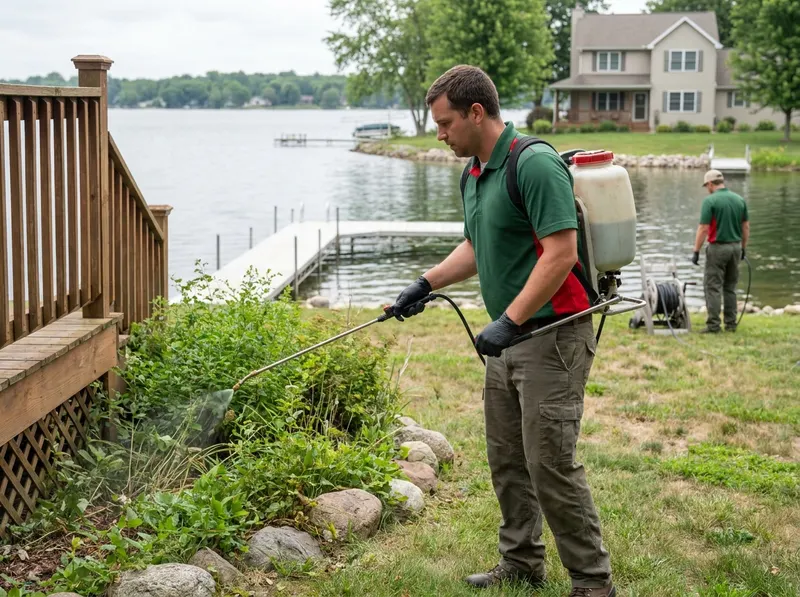
Properties along the Grand River promenade, Reeds Lake in East Grand Rapids, and the private shoreline impoundments around Westside Connection encounter relentless pressure from emerging aquatic insects. When midges and mosquitoes hatch in spring and mid-summer, adult populations settle directly into the sheltered structural voids, cedar siding, and screened porches of shoreline homes. Lakefront sprays address this biological pressure through targeted pyrethrin-derived microencapsulations and non-toxic residual repellents applied strictly up to regulatory setback zones. Unlike broad agricultural broadcast spraying, lake and waterfront barrier programs require a disciplined 25-foot buffer zone from open water to protect non-target freshwater organisms, adhering to Michigan Department of Agriculture and Rural Development (MDARD) pesticide safety standards.
Waterfront residences face structural fouling alongside biting insects. Orb weavers and large fishing spiders exploit the steady insect drafts generated by river corridors and lake basins, coating soffits, fascia boards, and outdoor lighting with dense webs and acidic droppings that degrade painted trim. If structural pest pressure is confined to inland residences in Alger Heights or Creston, a conventional foundation perimeter barrier fits best. For properties directly adjacent to water bodies like Millennium Park waterways or Fisk Lake, specialized shoreline applications are mandatory; the trade-off requires respecting environmental buffers while focusing intensive contact sprays on elevated structure eaves, undersides of decks, and upland ornamental shrubs where midges rest during daytime heat.
Shoreline applications avoid high-pressure washouts by utilizing specialized microencapsulated formulations that bond to plant surfaces and treated wood within 30 minutes of application, remaining active through Kent County humidity and morning condensation. Licensed technicians execute treatment through three distinct sequential actions: 1. Mechanical web removal and residual spray application across high dock posts, boathouse eaves, and under-deck joists. 2. Low-drift foliage misting across windbreak buffers, dense hosta beds, and ornamental turf staying outside the 25-foot shoreline boundary. 3. Foundation micro-injections into structural gaps where damp air attracts interior insect migrations. Over-the-counter canister foggers from retail hardware outlets dilute rapidly in lakefront breezes and lack the bonding agents necessary to survive dew, making clinical barrier placement necessary for long-term reduction.
Every job gets a firm, written price after a free on-site visit.
Tell us about your lake and waterfront property sprays job in Grand Rapids and we'll send a clear, written quote, usually the same day.
 Iverna Pest Pros